Monsoon in Nepal's Wettest City: What 3,870 mm a Year Does to You
Ninety percent humidity, sweat that cannot evaporate, and an appetite that disappears. Monsoon is not the off-season for treatment — classically it is the best season for it.

The numbers, because they are extreme
Pokhara receives roughly 3,870 mm of rain a year — the highest of any city in Nepal, and several times what Kathmandu gets. July alone averages around 943 mm across sixteen rainy days, with relative humidity close to 90%. The Annapurna wall sits directly north of the valley and wrings the monsoon out over the town.
That is not a weather footnote. It is a physiological environment, and if you live here you spend a quarter of the year in it.
What high humidity actually does to a body
- Cooling stops working. Sweat only cools you when it evaporates. At 90% humidity it does not, so you sweat more, lose more salt and feel hotter at a lower temperature.
- Digestion slows. Appetite drops and food sits heavier. This is the most consistent complaint we hear in July and August.
- Joints stiffen. Damp cold is felt in joints differently from dry cold, particularly by anybody with existing arthritic change.
- Skin misbehaves. Fungal infection between toes and in skin folds is common, and so is a general dull, congested feeling in the face.
- Sleep gets shallow. Warm, wet, still air is poor sleeping weather, and mosquitoes are worse in Pokhara than most visitors expect.
- Mood flattens. Two weeks without seeing the mountains does something measurable to people who came here for them.
The Ayurvedic reading of the same season
Classical Ayurveda calls this Varsha ritu and treats it as the most physiologically fragile season of the year. The description is precise about the mechanism: digestive fire — agni — is at its weakest, Vata becomes aggravated by cold and damp, and Kapha begins to accumulate.
Translated into what people report: no appetite, bloating, heaviness, aching joints, sluggish mornings, and a body that feels waterlogged. The classical texts are describing exactly the July complaints we see in the treatment room, which is one of the better arguments for taking the seasonal framework seriously rather than as folklore.
Eating through it
- Cooked, warm and light. Monsoon is not the season for salads or cold food.
- Ginger, black pepper, cumin, ajwain — the warming digestives, in real quantities rather than as garnish.
- Reduce curd and heavy dairy, which most Nepali households already do in Shrawan.
- Be careful with raw leafy greens and street water. This is the season for waterborne illness in Pokhara and always has been.
- Boiled or filtered water, drunk warm. Cold water on weak agni is the single worst thing on this list.
- Eat less than you think you should. Appetite dropping is information, not a problem to override.
Which treatments suit the season
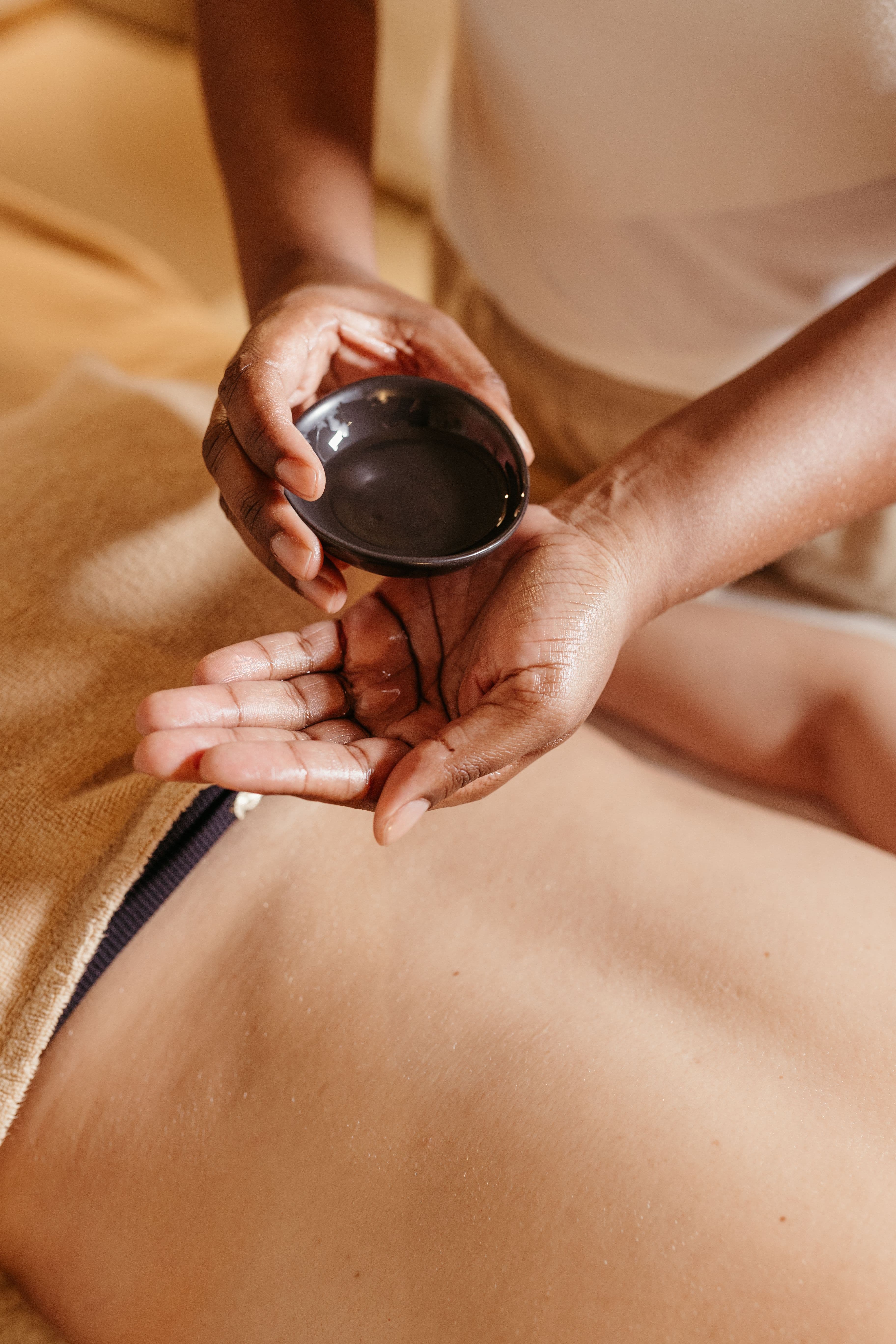
The instinct is to book a heavy oil massage, and it is the wrong instinct. Heavy oil into a damp, congested, Kapha-accumulating body adds to the problem. Monsoon therapy runs drier, warmer and more stimulating.
- Udvartana — dry herbal powder massage, worked against the hair direction. The classical Kapha treatment and the right call for heaviness and sluggish mornings.
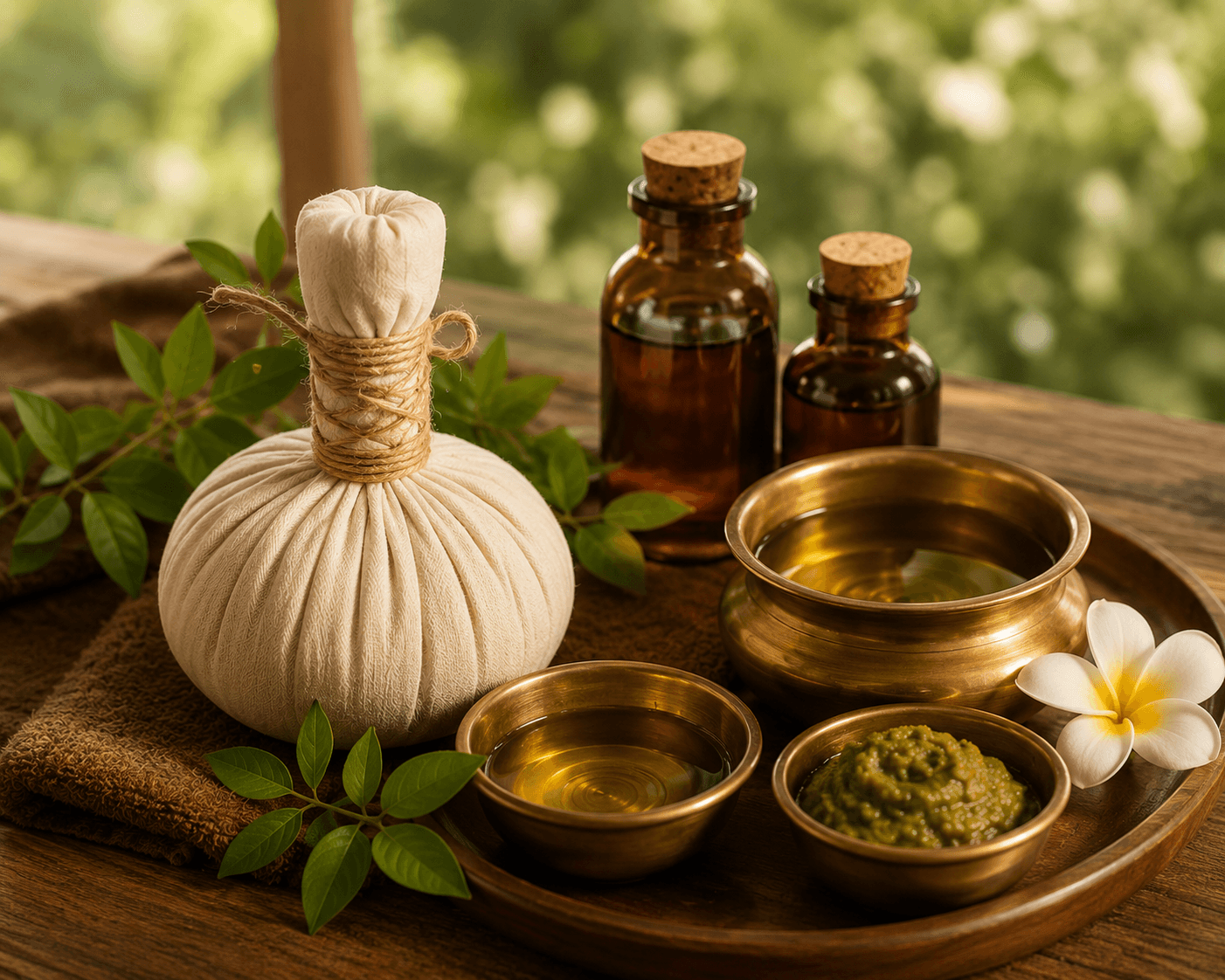
- Podikizhi — heated dry herbal powder poultices, for damp-weather joint pain.
- Herbal steam (Swedana) — the most underrated monsoon therapy, and cheap.
- Lighter, warmer oils in smaller quantity where oil is used at all — and always followed by steam rather than left on the skin.
- Foot treatment, which is both pleasant and practical when your feet have been wet for two months.
Why monsoon is the classical Panchakarma season
This surprises visitors, but it is orthodox: the monsoon is traditionally considered the best time of year for Panchakarma. Kerala built an entire wellness season around it — Karkidaka Chikitsa — for reasons that apply just as well to Pokhara.
The logic is straightforward. Pores are open and tissue is soft in humid weather, so oleation and sweating work more efficiently. The doshas are already mobilised rather than static, which is precisely the state you want before elimination. And practically, nobody is doing anything else — a programme that requires you to rest, eat a restricted diet and avoid exertion for a week is far easier to complete in the rain than in October when the mountains are out.
It is also, frankly, the season we can give you the most attention. Our October and November schedule is full of trekkers; July is not.
Monsoon Pokhara, for what it is worth
The town in monsoon is a different place: quiet, green to an almost absurd degree, waterfalls running everywhere, and guesthouse rates at half of what they are in October. The lake is high, the paragliding mostly is not flying, the flights get cancelled, and the trails have leeches.
For anyone considering a longer stay — a Panchakarma programme, a yoga course, a month of writing — those are good trade-offs rather than bad ones. The season that is worst for sightseeing is genuinely the best one for treatment, and that is not a marketing line. It is the reason the classical texts put it there.
Last updated .
Written by
Dr. Sushmita Bhattarai
Clinical Director
BAMS (Bachelor of Ayurvedic Medicine & Surgery), NAMC registered · 16 years in practice.
See the 7-day Panchakarma programme
Doctor-supervised, medicines included, and easiest to complete in the quiet months. NPR 44,000.