What a Massage Actually Costs in Pokhara (2026 Prices)
Two spas fifty metres apart on the same Lakeside street will quote you NPR 1,500 and NPR 4,000 for what the menu calls the same thing. Here is what sits behind the gap.
The Lakeside range, as it stands in 2026
A one-hour massage in Pokhara currently sells for anywhere between NPR 1,500 and NPR 5,000. The bulk of Lakeside sits in a narrower band than that: NPR 3,000–3,500 for a standard hour of Ayurvedic, Swedish or deep tissue work, and NPR 4,000–4,500 for the treatments that need equipment or a longer set-up, such as Shirodhara or hot stone.
Shorter, more specific sessions cost less: foot reflexology or a head-neck-shoulder treatment typically runs NPR 2,000–2,800 for 45 to 60 minutes. Sauna or steam on its own is around NPR 1,500 for one person. Three-hour packages that stack three or four therapies together sit at NPR 8,000–10,000, and couple's packages at NPR 16,000–20,000 for two people.
For reference, our own hourly rates are NPR 3,200 for Abhyanga, NPR 3,000 for deep tissue, NPR 4,000 for Shirodhara, NPR 4,500 for hot stone and NPR 2,000 for a 45-minute Padabhyanga. That is deliberately mid-market. We are not the cheapest room on the street and there is no version of this business where we could be.
Why the same hour costs half as much next door
The menu word is identical; the cost structure underneath it is not. Four things account for almost the entire spread.
- Therapist pay. A trained Panchakarma technician with several years of practice does not work for the same wage as somebody taught the sequence over a fortnight. This is the largest single line in the price, and it is the one that gets cut first.
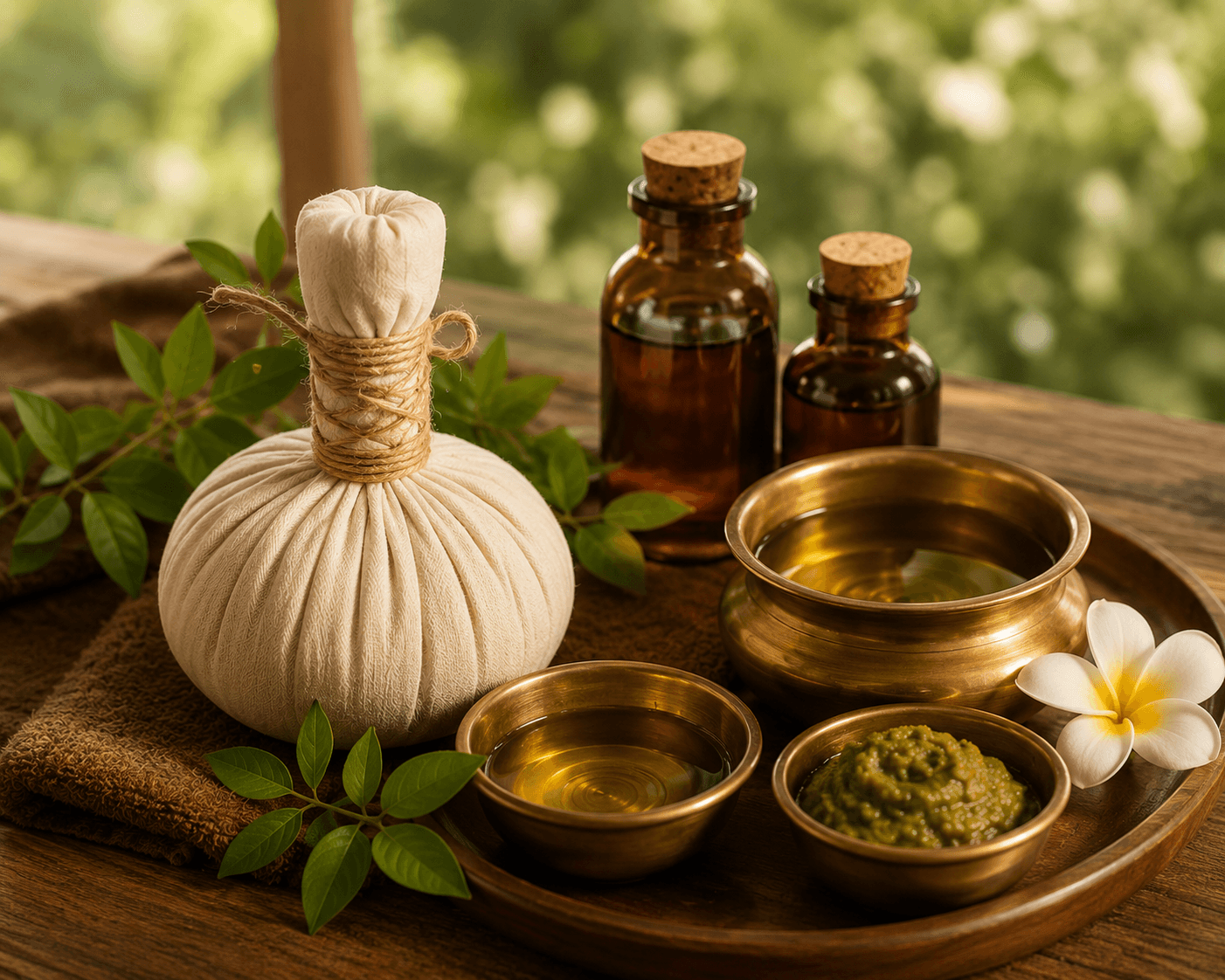
- Oil. Classical medicated oils from a licensed pharmacy — mahanarayan, dhanwantharam, ksheerabala — cost multiples of plain refined sesame or mustard. A litre of the real thing does not stretch far when you decant per guest and never pour it back.
- Consultation time. Ten to twenty-five minutes of a practitioner's attention before the treatment starts is unpaid room time. Skipping it is the easiest saving available, which is why so many places skip it.
- Laundry, linen and single-use items. Fresh sheets, fresh towels, disposable underwear and single-use poultices for every guest are a real recurring cost. Reused linen is invisible to you and cheap for them.
What the price should include
Before comparing two quotes, check that they cover the same things. In Lakeside the following should all be inside the number on the menu, with nothing added at the desk afterwards.
- The consultation, however short.
- All oils and herbs used in the treatment.
- Robe, slippers, towels, disposable underwear and a locker.
- A hot shower afterwards, and somewhere clean to change.
- Tea afterwards, which matters more than it sounds when you have just come off a trail.
- Taxes and any service charge. Ask specifically. A 13% VAT surprise at the counter is not unheard of.
The advance-booking discount, explained honestly
Most Lakeside spas advertise 10–15% off for booking ahead, and the discount is genuine in the sense that you do pay less than the walk-in rate. It is also a scheduling tool: an empty table at 11am earns nothing, so filling it at 85% of list is straightforwardly good business. Take the discount, but do not treat it as evidence of quality.
What you should not do is haggle at the door in October or November. In peak season the good rooms are full and the discount disappears, because it was never charity — it was yield management.
Packages: when the maths works and when it does not
A three-hour package at NPR 8,900 that contains a consultation, a 60-minute Abhyanga, a 45-minute Shirodhara, steam and lunch is cheaper than buying those pieces separately, usually by 20–30%. That discount is real, and it exists because one long booking is far more efficient for us than three short ones.
The trap is buying a package for the length rather than the content. Three hours of therapy is more than most bodies want in one sitting, and stacking a deep tissue session on top of a full Abhyanga is not twice as useful — it is one good treatment plus an hour your nervous system stops absorbing anything. If you are choosing between a long package and two separate visits on two days, take the two visits.
Tourist price and Nepali price
Dual pricing exists across the Pokhara tourism economy and pretending otherwise would be silly. Our position is a resident rate rather than a tourist markup: Nepali residents and long-stay guests pay the membership price year-round, including in peak season when Lakeside demand pushes everything up.
If you live here, ask for it rather than paying the walk-in rate twelve times a year. Regularity is what makes Ayurvedic treatment work at all, and it should not be priced as a holiday purchase for the people who can actually sustain it.
Where cheap becomes expensive
- Oil poured back into a communal bottle after your session — a hygiene issue, not an economy.
- No consultation, then an 'Ayurvedic' treatment chosen by whichever oil is already open.
- A quoted price that becomes a longer, more expensive treatment once you are on the table.
- Hard selling of oils, courses or packages during or immediately after a session, when you are drowsy and agreeable.
- A room with no shower, which after a full-body oil massage means walking back to your guesthouse coated in it.
- Massage offered by somewhere whose actual licence is for something else entirely. Ask what they are registered as.
The short version
Budget NPR 3,000–4,500 for a good hour in Lakeside, NPR 7,000–9,000 for a proper multi-therapy afternoon, and treat anything under NPR 2,000 as a pleasant oil rub rather than a therapeutic treatment — which is a perfectly reasonable thing to buy, as long as that is what you think you are buying.
Last updated .
Written by
Dr. Sushmita Bhattarai
Clinical Director
BAMS (Bachelor of Ayurvedic Medicine & Surgery), NAMC registered · 16 years in practice.
See our packages
Every package with the price, the duration and what is included. No add-ons at the desk.