After Sarangkot: The Neck Paragliding Gives You, and What to Do With It
Everyone photographs the Annapurnas from a harness. Nobody photographs what the harness does to the trapezius on the way back down.
A harness is a position you hold, not a seat
A tandem paraglide off Sarangkot lasts roughly half an hour. For most of it you are seated in a harness that supports your pelvis and thighs but not your spine, with your legs hanging, your arms up or braced, and your head tilted back and rotating constantly because there is a 7,000-metre mountain range on your right and a lake underneath you.
That combination — no lumbar support, dangling legs, sustained cervical extension and rotation — is a held posture, and thirty minutes is long enough to matter. Add the excitement, which quietly recruits the shoulders towards the ears for the entire flight, and the landing at Khahare produces a very consistent set of complaints.
What actually gets loaded
The soreness usually shows up that evening or the next morning rather than on landing, which is why people connect it to the guesthouse pillow instead of the flight.
- Upper trapezius and levator scapulae — the shrug that nobody notices they are holding.
- Sternocleidomastoid and the deep neck extensors — from craning at the range and looking down at the lake.
- Thoracic spine — held in extension against an unsupported back.
- Hip flexors and adductors — legs unsupported in a seated position with nothing to push against.
- Forearms and grip — if you were holding the harness straps, and almost everybody is.
The other Pokhara neck: the sunrise trip
The Sarangkot sunrise run is the other producer of stiff necks in this town. You are up at 4:30, sitting in a cold jeep on a winding road, then standing still in the cold for an hour with a camera raised, looking up at Machhapuchhre. Cold muscle, static loading, arms overhead. Then you go back to bed for three hours in a slumped position and wake up unable to turn your head to the left.
If you did both the sunrise and a flight on the same day — which is a popular and thoroughly punishing combination — expect the neck to complain properly on day two.
Zipline and ultralight are different problems
The zipline on the Sarangkot side is short, extremely fast and largely a harness-and-brace event: the load lands in the shoulders, the grip and, for people who tense hard, the jaw. Ultralight flights are gentler on the body but involve a longer period of vibration and a fixed seated posture, which shows up in the lower back rather than the neck.
None of these need deep work. They need the specific muscles that were held to be persuaded to let go.
Timing: same afternoon or the next day?
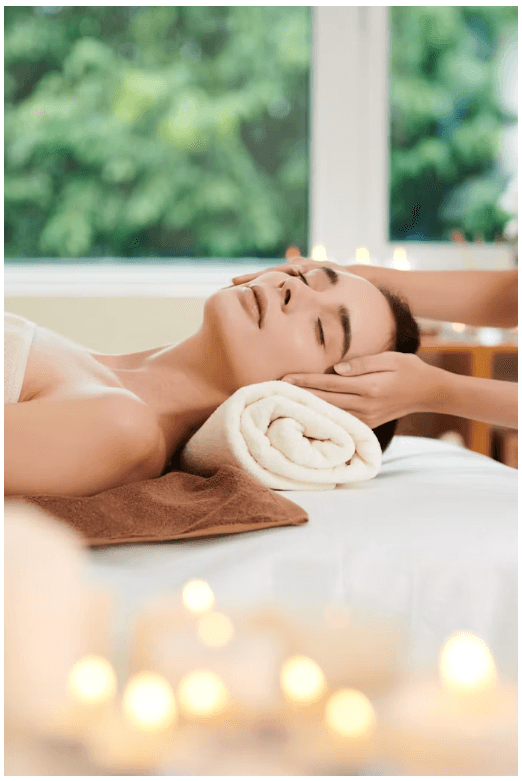
Same afternoon is better if you are only in Pokhara briefly, because you are treating a held posture rather than tissue damage — there is no inflammatory window to wait out. A 45- to 60-minute head, neck and shoulder treatment on the afternoon of your flight prevents most of the next-day stiffness rather than chasing it.
One exception: if you were airsick — and a meaningful minority of tandem passengers are, especially on a thermic mid-morning flight — skip it that day. Deep work on somebody whose vestibular system is still complaining makes the nausea worse. Rehydrate, eat something plain, come tomorrow.
The session that actually fits
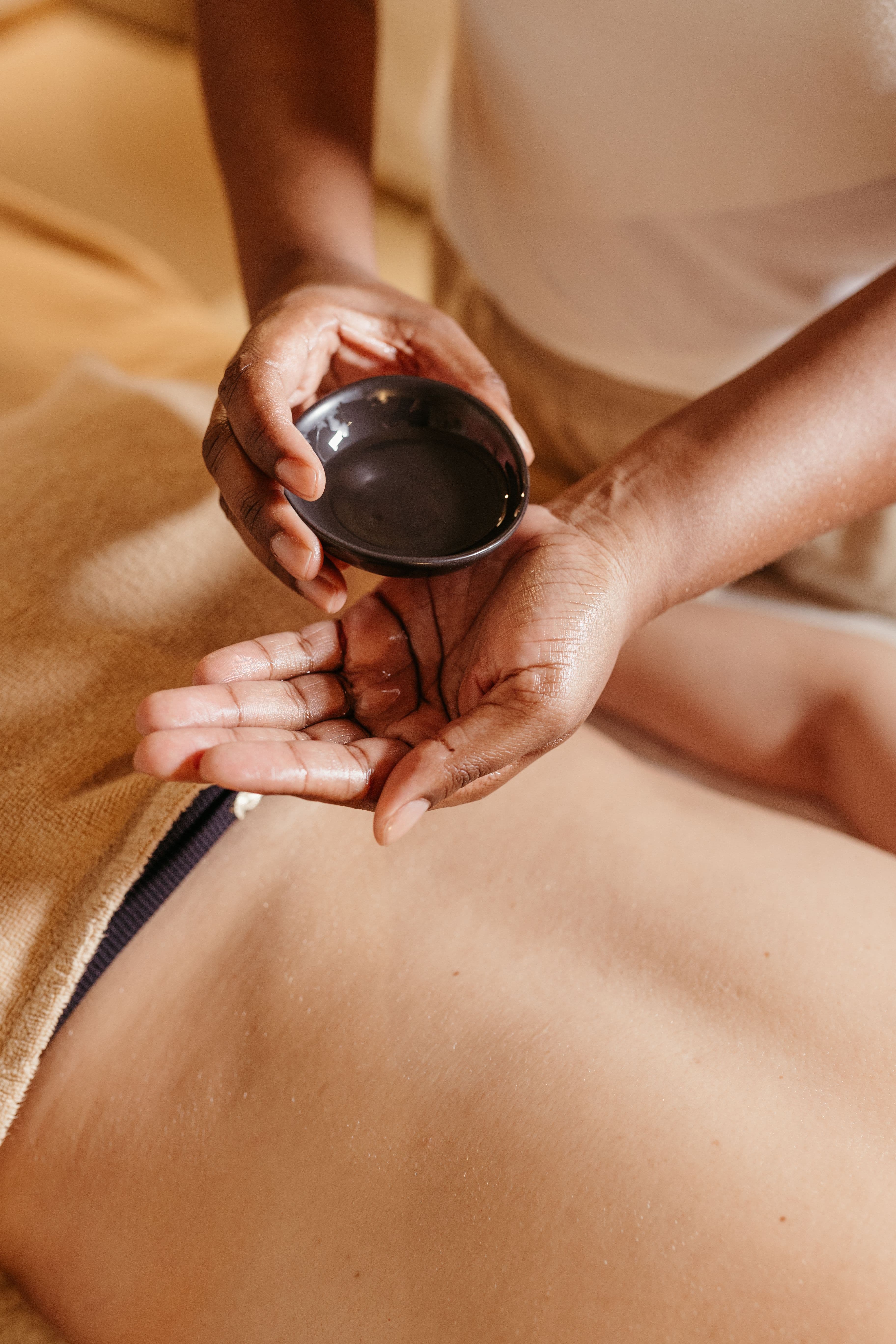
For a post-flight neck, a full-body massage is the wrong purchase. What works is 45 to 60 minutes concentrated above the mid-back: sustained work into the upper trapezius, release of levator scapulae at its insertion, careful work along the cervical extensors, thoracic mobilisation, and the forearms if you gripped. Warm oil rather than dry technique, because the tissue is short rather than injured.
Add a foot treatment if your legs feel odd — the dangling-leg position leaves some people with heavy, tingling feet for a few hours, and twenty minutes of Padabhyanga clears it faster than waiting.
If you fly for a living
Pokhara's working tandem pilots fly this pattern six or eight times a day through the season, and the pattern becomes chronic rather than acute: shortened pecs, a locked thoracic spine, one-sided load from the passenger's weight distribution and the brake handle, and neck extensors that never fully release between flights.
That is not a treat-it-once problem. It is a fortnightly maintenance problem, and it is worth pricing as one — ask us about the off-peak weekday rate rather than paying tourist rates on your own working season.
Last updated .
Written by
Bikash Tamang
Sports & Recovery Therapist
Diploma in Sports Massage; Ayurvedic Therapy Level 3 · 9 years in practice.
Head, neck & shoulder work
60 or 90 minutes of targeted release from NPR 3,000 — ten minutes from the Khahare landing zone.